
Why a School Choir Is the Best Place to Start (And Why It’s Easier Than You Think)
You’ve just been given the role of primary school music lead. There was no ceremony. No handover. No training. Someone has simply decided that you’re the best option - perhaps because you sing a bit, or because you once played cornet when you were twelve.
Suddenly, you’re responsible for music.
At the same time, music is no longer something schools can quietly sideline. In recent years, Ofsted and governing bodies have taken a much keener interest in creative subjects. That’s brilliant - but if your school doesn’t yet have a strong musical culture, it can feel overwhelming. No choir, limited curriculum confidence, patchy provision at best.
Schemes can help, of course. There are some good ones out there. But even the best scheme still needs shaping around your children, your community and your school development priorities. Starting with curriculum documents and long-term plans often feels like the worst possible place to begin.
Instead, start somewhere tangible. Start with singing.
Start with a choir.
Everyone has a voice. Singing is financially accessible, inclusive, and, when taught well, genuinely achievable for almost all children. It builds confidence, listening skills, teamwork and musical understanding in a way few other activities can. And right now, there’s national momentum behind it.
The BBC has just launched BBC A Choir Every School campaign, a nationwide music education initiative designed to get more young people singing together, particularly targeting 11–14-year-olds. Research has shown that singing often drops off when children move into secondary school, and this campaign aims to tackle that head-on. Over the next three years, schools will have access to free resources through BBC Bitesize, including backing tracks, scores, warm-ups and teacher guidance, alongside workshops and large-scale performance opportunities.
While the campaign focusses on secondary schools, its message matters just as much - if not more - in primary settings. Because the confidence, habit and joy of singing don’t suddenly appear at 11. They’re built much earlier.
I found myself in exactly this situation...
When I took on the music lead role in my school 8 years ago, there was no choir and very little music happening at all. I’d worked as a singer, played a little and studied music (albeit, music business), but I had no real understanding of how a school music curriculum should function. At this stage, I wasn’t an expert – I was likely the best option available.
What I did have was a desire to help children experience the benefits of music learning, particularly through the voice. So for the first year or two, I relied on a scheme to support classroom teaching while I focused my energy on one thing: building a culture of singing in the school.
I started a choir.
At first, almost nobody came. In a school of over 400 pupils, I think the initial sign-up was around ten or twelve children. It was disheartening - but I kept going. Rehearsals happened whether numbers were high or low. Opportunities were created. Slowly, word spread. Children talked. Friends joined. The choir grew - not quickly, but steadily.
It was a slow burner, fuelled largely by stubborn determination.
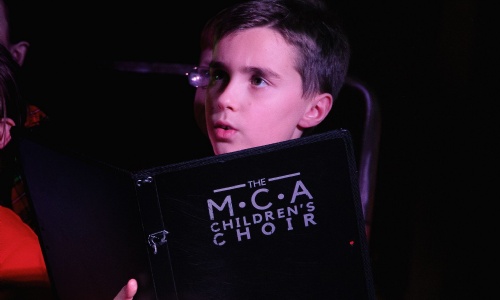
Now, our school choir has over sixty dedicated singers rehearsing once or twice a week, plus an auditioned youth vocal group and boys' choir in partnership with the Plymouth Youth Music Service. They perform regularly throughout the year, locally and further afield, and they’ve become a real source of pride for the school community. None of it happened overnight, and none of it was easy - but it was absolutely worth it.
If you’re starting from scratch, the key is not to make singing feel like another demand. Before you even launch a choir, plant the idea gently. In music lessons, include short singing games or warm-ups with actions and humour. Let children experience singing as something playful and safe, not formal or intimidating.
When you do start, avoid language that raises pressure. Call it a singing club. Run it at lunchtime or after school. Choose songs children recognise and enjoy - Disney, pop songs with positive messages, silly action songs. Familiarity builds confidence.
Getting the word out matters too, but it doesn’t need to be complicated. Posters help, especially if children are involved in designing them. Assemblies are powerful - even a short demonstration song can spark interest. If your school uses social media or parent communication platforms, short clips of rehearsals (with permissions) can make a huge difference.
Resources matter, but not as much as enthusiasm. Clear lyrics, simple melodies and visual support go a long way. Colour-coding, pictures, movement and body percussion all help children access music without fear. Instruments can add fun, but they’re not essential - the voice is more than enough.
You’ll encounter challenges. Some children will be nervous. Some will insist they “can’t sing”. That’s normal. Pair anxious singers with friends. Keep the atmosphere relaxed and supportive. Singing is a skill, not a talent and skills grow with practice.
As your choir develops, variety keeps things fresh. Mix traditional choir pieces with pop songs, rounds, folk songs and music from different cultures. Let children have a say in what they sing. When they feel ownership, commitment deepens.
And when it comes to performing, think small at first. Sing to another class. Perform in assembly. Invite parents in for a short sing-along. Each performance builds confidence and reinforces that singing matters.
Perhaps most importantly, make singing part of everyday school life. A minute of singing in class, a warm-up before lessons, a song as a transition - these small moments slowly build a culture where singing feels normal.
That’s what creates long-term change.
With initiatives like the BBC's A Choir in Every School campaign shining a national spotlight on the importance of collective singing, there’s never been a better moment to start. If secondary schools are being encouraged to rebuild singing culture, primary schools have the chance and the responsibility to lay the foundations.
If your school doesn’t have a choir yet, but you wish it did, start here. It’s achievable. It’s powerful. And once those voices start to grow, everything else becomes possible.