
Why Early Singing Technique Matters: Building Musical and Vocal Foundations in KS1
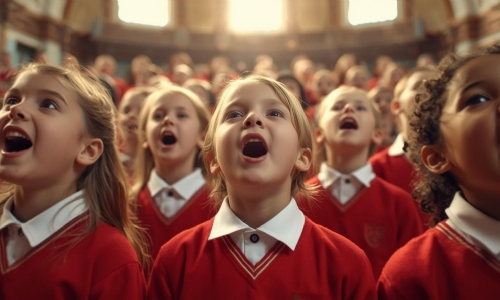
On Thursday morning, I visited our fellow PL2 school, Ford Primary School, to deliver a singing workshop for KS1 pupils (Year 1 and Year 2). The session focused on developing foundational vocal and musical skills that support healthy voice use, musical understanding, and long-term engagement with singing.
The aims of the workshop were to support pupils to:
- explore and understand their own singing voice
- internalise a steady beat
- develop early pitch accuracy and rhythmic control
- learn age-appropriate strategies for vocal care
These elements form the core of effective early vocal pedagogy and are widely recognised within music education research as critical to sustainable musical development.
Children are highly receptive to musical learning in the early primary years. Research consistently shows that singing ability is not fixed and can be significantly improved through structured, high-quality teaching. When children are supported to sing accurately and comfortably from an early age, they are more likely to retain confidence in their voice and continue singing as they grow older.
Early technique is less about formal vocal training; and moreover, it focuses on:
- developing accurate pitch through listening and imitation
- establishing a sense of pulse and rhythm through physical and vocal engagement
- encouraging efficient, relaxed vocal production appropriate to a child’s developmental stage
Without this early guidance, children may develop habits such as shouting, pitch insecurity, or vocal tension, which can inhibit both musical progress and vocal health. Teaching children how to use their voice safely helps ensure that vocal development is progressive, healthy, and inclusive.
Beyond musical outcomes, there is strong evidence linking group singing to improved emotional wellbeing, social connection, and self-regulation in children. Singing together promotes a sense of belonging and shared purpose, supporting positive classroom culture and collaborative learning.
Studies indicate that collective singing can:
- reduce stress and anxiety
- support emotional expression
- enhance social bonding and cooperation
- improve confidence and concentration
In a primary school context, singing is a powerful tool that supports not only musical learning, but also wider developmental and wellbeing goals.
The workshop drew on principles from the Kodály approach, which places singing at the centre of musical learning. Kodály-inspired practice emphasises the systematic development of musical understanding through the voice before the introduction of abstract notation.
Key features of this approach include:
- using singing as the primary instrument
- developing pitch and rhythm through sequential, age-appropriate activities
- embedding musical concepts through repetition, movement, and aural learning
This method supports children in internalising musical skills deeply and securely. Research has shown that Kodály-based teaching can lead to improved pitch accuracy, rhythmic understanding, musical memory, and literacy. Importantly, it also ensures that musical learning is accessible to all children, regardless of background or prior experience.
By focusing on internalised pulse, pitch relationships, and vocal awareness, children develop skills that transfer directly to wider musical application, including instrumental learning and ensemble work.
High-quality singing provision in the early years lays the groundwork for lifelong musical engagement. When children are taught how to use their voice effectively, understand musical structure, and participate confidently in shared music-making, the benefits extend well beyond the music lesson.
This work at Ford Primary School and the music learning embedded at Mayflower Community Academy demonstrates how structured, developmentally appropriate singing experiences can support both musical progress, attainment application and pupil wellbeing – a fully well-rounded approach to learning. By investing in strong vocal foundations early, schools create the conditions for confident, capable, and musically literate learners.